

Insights on future costs, capacity and emissions
Nuclear power holds significant potential, particularly when a deeper look at its economics and design, for shipping shows the fissile material used to power reactors can viably compete as a marine fuel.
The ULC-Energy/C-Job study compared the emissions and economics of a bulk carrier powered by Very Low Sulphur Fuel Oil (VLSFO) with one powered by green ammonia, and one powered by nuclear (with all other parameters remaining constant). Deep sea cargo vessels such as bulk carriers are one of the most suitable vessels to be considered for nuclear power as, due to their size, the mass of the reactor and shielding is generally lighter than the current mass of conventional fuels. In addition, because port access is likely to be one of the main challenges for nuclear-powered shipping,the point-to-point routes of bulk carriers reduce the number of ports that would need to approve anuclear-powered vessel.
Collaborating with ULC-Energy BV, a nuclear development and consulting company, C-Job established technical and economic insights into the vessel’s general arrangement, cargo capacity, harmful emissions and waste, and cost.
Integrating a nuclear reactor into a bulk carrier proved to have minimal impact on its cargo-carrying capacity. In addition, amongst all the propulsion options, nuclear energy offered potentially the lowest operating cost per ton transported. While the higher upfront capital cost of constructing a nuclear-powered vessel is a major factor, it is potentially outweighed by the lower fuel cost that will allow the ship to sail farther and faster, without any bunkering logistics for a number of years. That being said,compared to conventionally fuelled ships, nuclear-powered vessels are likely to face stringent security and operational requirements that could add substantial costs and the study concluded this is an area requiring further investigation.
Crucially, civil nuclear propulsion eliminates greenhouse gas emissions altogether, outperforming evengreen ammonia, and our findings demonstrated civil nuclear’s strong potential to support the shipping industry’s decarbonization goals. It will, however, take several (10+) years before reactors being developed on land will be ready for use in ships.
There continues to be a great deal of interest in nuclear for shipping, and this study was an important step forwards for the client, and for the shipping industry at large.
Nuclear study for a bulk carrier
Project highlights

Comparative study
Impacts of using three different fuel types: VLSFO, green ammonia, and nuclear

Economic analysis
Analysis of capital costs, fuel costs and operating costs

Reduction of emissions
Demonstrating how vessel design can eliminate greenhouse gas emissions
Nuclear study for a bulk carrier
C-Job client testimonial
Nuclear study for a bulk carrier
Scope of work
Decarbonization, energy efficiency and compliance
Nuclear study for a bulk carrier
Related case studies
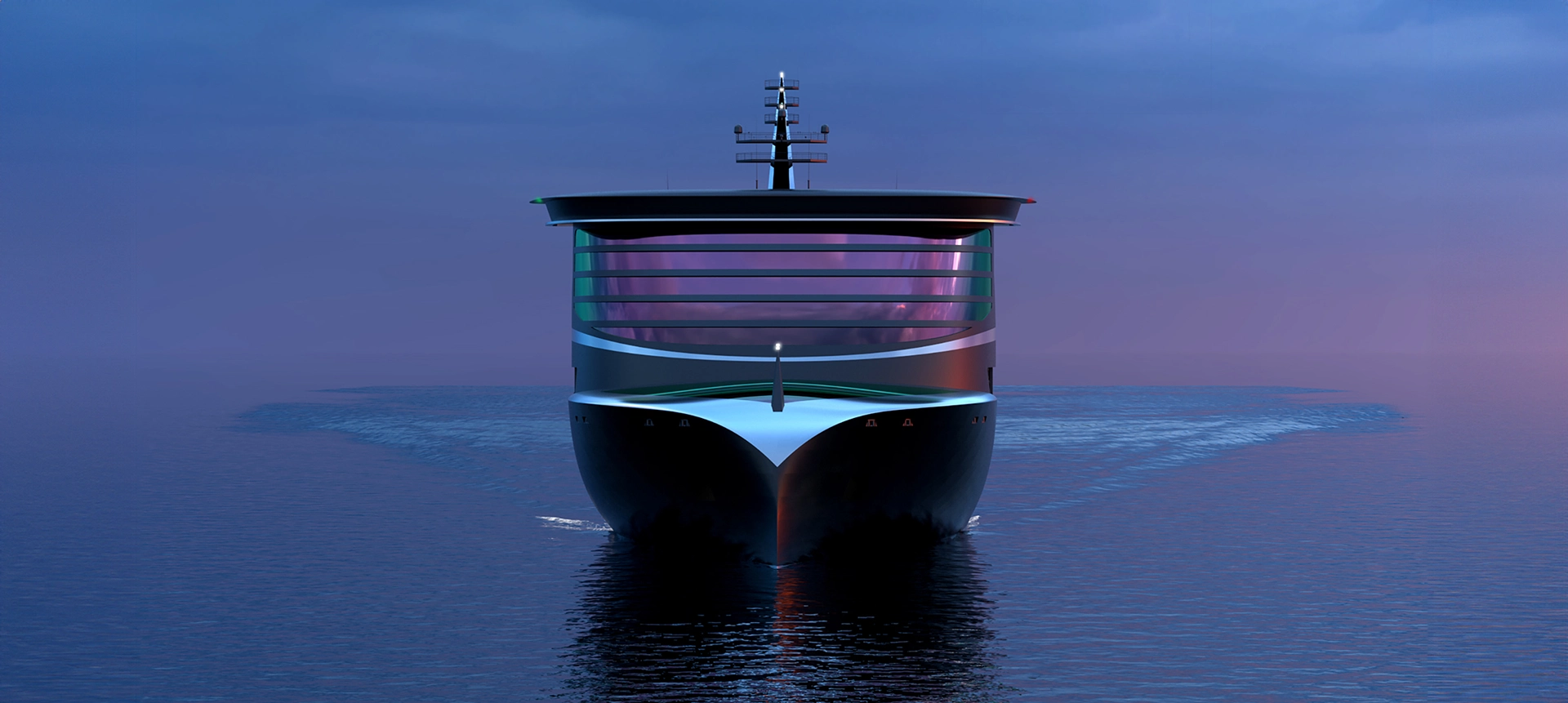
Nuclear-powered commercial vessel