
Judging the optimal timing for vessel investment, and having clarity on the business case, are ever-present challenges for owners and charterers.
But can you always wait? While some decisions can be more easily deferred, emissions continue to be a line item on your balance sheet. The cost of doing nothing can be higher than the cost of taking action to decarbonize, so greater urgency may be required.
The EU Emissions Trading System (EU ETS) and FuelEU Maritime regulations are tightening GHG intensity limits in EU ports, while the IMO’s Global Fuel Intensity (GFI) framework is expected to be implemented in the coming years. Adding to these pressures we have geopolitical instability, which is causing fluctuating fuel prices.
Rather than continue with the status-quo, ship owners and charterers need to evaluate a number of options, to be ahead of the curve as costs rise and regulations tighten. Appropriate and immediate action can be the difference between keeping a vessel, or a fleet, in longer term operation.
Achieving future predictability
Despite an unpredictable marketplace, ship owners or charterers cannot risk rushing into just ‘any’ decarbonization solution, or work with generic cost or savings figures. Every fleet, vessel and commercial setup is different. Fuel exposure, carbon liability and investment constraints will vary widely depending on the operating profile, chartering structure and asset age.
These specifics must be taken into account to avoid misleading, rather than supporting, decisionmakers: quantification should only follow once the client’s actual baseline is clearly understood.
This is where C-Job’s skills, as an independent knowledge partner and system integrator, will help you create predictability for the future. We work with you to select the best solutions for your vessels for both the short term and long term, and for existing vessels and new builds.
There are four steps to this proven process, which are designed to reduce uncertainly, at low cost, before you commit to detailed analysis or investment. Each step narrows risk and improves the quality of decision making:
- Determine a baseline by calculating your future costs
- Identify and refine a list of the most promising solutions
- Move from initial potential to detailed assessment for each shortlisted solution
- Define your roadmap for strategic implementation based on those solutions.
Decisions can then be made based on complete information, and the unique DNA of your vessel(s) or fleet. This will include operational, commercial, and physical boundaries, as well as a schedule of what needs done and when, to keep downtime to a minimum.
Modernization vs chartering vs new build
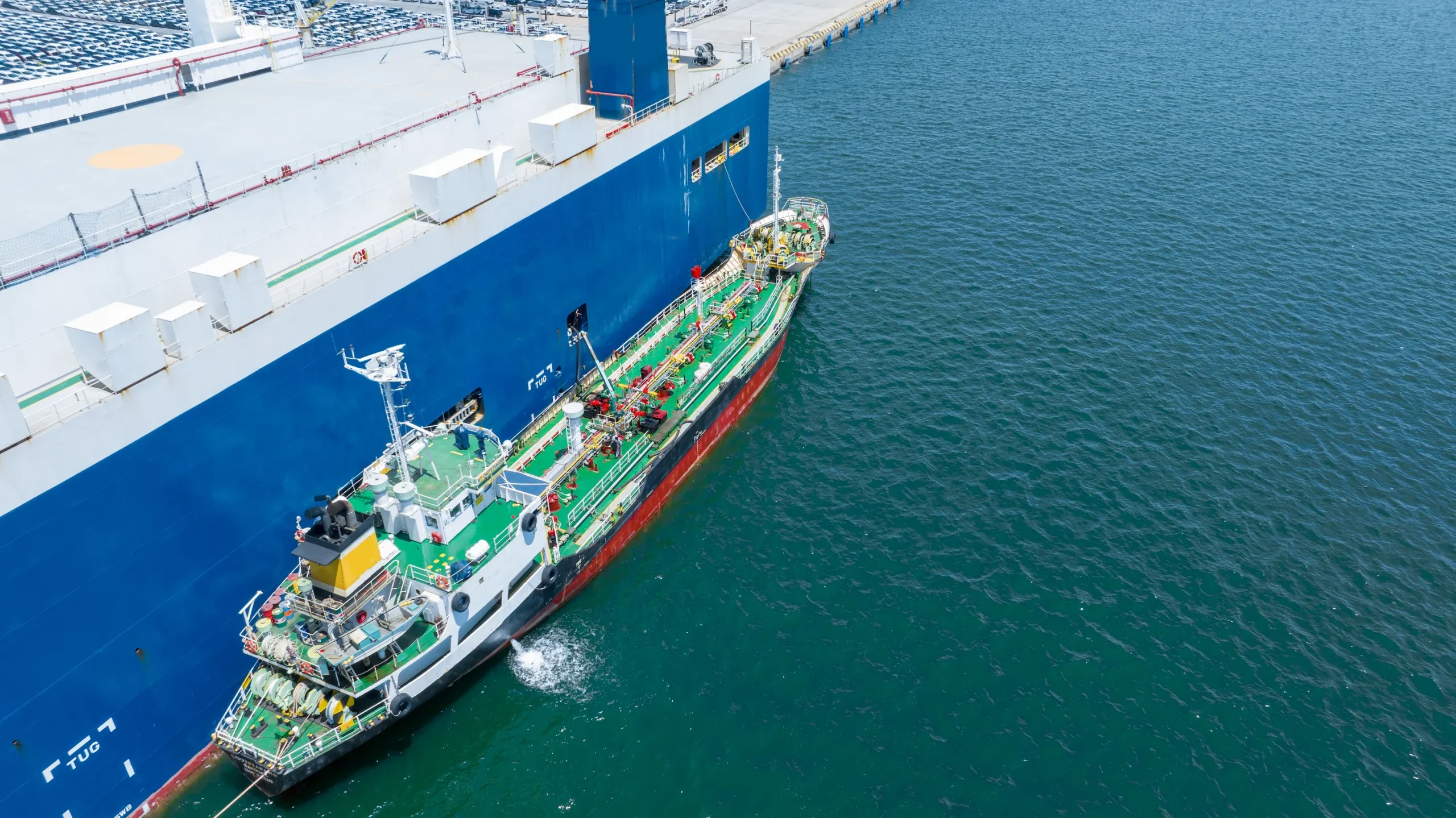
Depending on the vessel, different scenarios are at play when it comes to the cost of doing nothing, versus decarbonizing.
Existing vessels are exposed to fuel price volatility, carbon cost escalation and tighter regulations as they age. Without incremental action, pressures become asset‑level issues – leading to accelerated depreciation, reduced residual values or limited financing options. The overall outcome is fewer remaining years of operation, so the urgent goal must be to extend that operational window.
The economic business case for decarbonization in existing vessels will depend on the age and lifetime of the ship, which may not justify a significant retrofit. Early‑stage decarbonization measures will be more about stabilizing operational and financial exposure while preserving asset life. Ageing fleets typically have less tolerance for mis‑timed or over‑engineered investments. So a stepped approach allows owners to first understand where exposure is building – operationally,
commercially and physically – before considering measures that require meaningful capital commitment.
Owners who charter their vessels typically do not pay fuel costs, and may believe there’s less to gain from decarbonization. However, these owners could offset the cost of decarbonization measures by charging a higher day rate for a vessel that is more fuel-efficient: savings that could also be shared between owner and charterer.
For those who decide on a new build vessel, the cost of doing nothing to decarbonize – effectively building a diesel-powered ship – could mean an expensive retrofit to decarbonize in the future, or earlier vessel depreciation. Whereas if you design for a future retrofit now, you will have a more predictable and cost-effective long-term strategy for the vessel.
In all cases, the cost of doing nothing is not necessarily a steady cost increase, but rather a growing exposure to volatile outcomes – in earnings, asset value and strategic flexibility.
Key solutions for decarbonization

OPERATIONAL MEASURES
We analyze your vessel’s operational profile to tune design and purpose, and define potential savings.
Based on these results, we can help to define the implementation steps.
Adoption: Implementable now
Benefits: No additional capital expenditures and direct operational savings.

DROP-IN FUELS
We advise you on the use of marine drop-in biofuels, either in pure form or as a blend to replace conventional fossil diesel, weighing their cost and emission reduction level.
Adoption: Implementable now
Benefits: No additional capital expenditures and direct emission/cost savings.

ENERGY SAVING TECHNOLOGY
We consult with you on technologies such as wind-assisted propulsion, more advanced waste heat recovery, propulsion efficiency, and many others, to propose the most appropriate for your particular vessel.
Adoption: Implementable now and in the short-term (less than 5 years)
Benefits: More significant fuel cost savings.

ALTERNATIVE FUELS
We help you to evaluate, select and integrate alternative fuels. For existing vessels, this includes conversion to alternative fuels such as methanol. For new builds, this includes full and direct use of alternative fuels, or design-readiness for a cost-effective retrofit during the vessel’s lifetime – when conditions for alternative fuel use are most suitable.
Adoption: Implementable now, mid-and long-term (5-10+ years)
Benefits: Most significant emission reduction capability, compliant with future regulations and emissions taxation, plus maximizes cost-effectiveness over the vessel’s lifecycle
Read our guide to future-proofing fleet strategy
A lot is changing in the maritime world. For ship owners, that makes the economic debate of what should be invested in now, and what can be waited upon, a crucial one. Continue reading more on the cost of doing nothing in our Fleet Decarbonization Playbook here.