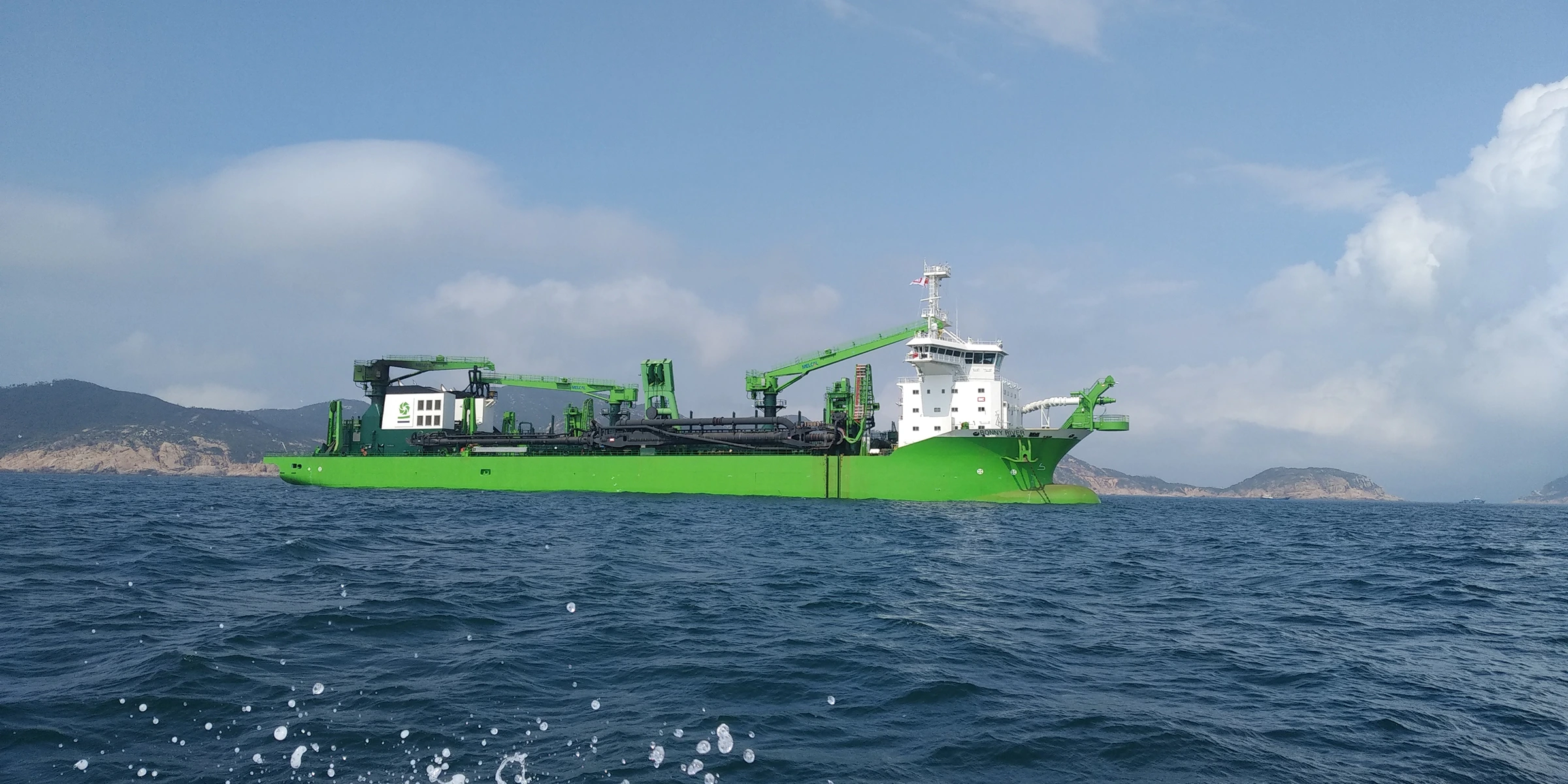

The complexity of equipment engineering varies greatly across vessel classes, depending on their design and function. At C-Job, we work on a wide range of vessel types and among the most complex and challenging vessels that our equipment engineering team have worked on recently are cutter suction dredgers (CSDs).
What makes CSDs stand out in their complexity is the specialist machinery that enables them to undertake their very specific purpose; the tough and intensive work of dredging. To ensure a successful installation the engineers have a wide range of parameters to consider throughout the design process. These together with a combination of sizeable steel structures and many moving parts requires equipment engineering teams with exceptional skills and experience.
What makes C-Job an ideal partner for CSDs

“Equipment engineering for CSDs requires a fusion of skills,” explains Marco Lambalk, Lead Engineer Mechanical.
“Firstly, it involves a thorough knowledge of both structural and mechanical engineering. Dredging involves substantial loads and many moving, often rotating, parts at a range of scales.” To integrate these variables requires in-depth knowledge of materials of all types, not least because the tolerances can be very fine and minimizing friction can be vital. Incorrect alignments bring with them a high risk of failure and so different types of calculations are needed to ensure that the alignments are at the necessary level of precision. C-Job has developed the necessary resources to achieve this along and uses a range of specialist software packages.
Another important consideration is that even a small change in the specification of one item of equipment can result in alterations being required in other systems as the demands on them change. For example, if a client decides that they want their CSD to cut just a few meters deeper, then the cutter ladder will need to be lengthened and strengthened, and more power will be required to maneuver it, leading to more associated modifications.
With CSDs, everything is interconnected and, for the engineers, understanding the relationships between the components is vital for a successful project. At C-Job we fully understand this and have the knowledge and experience to accurately define the load cases and perform the necessary calculations to define the capabilities, size, and positioning of the equipment.