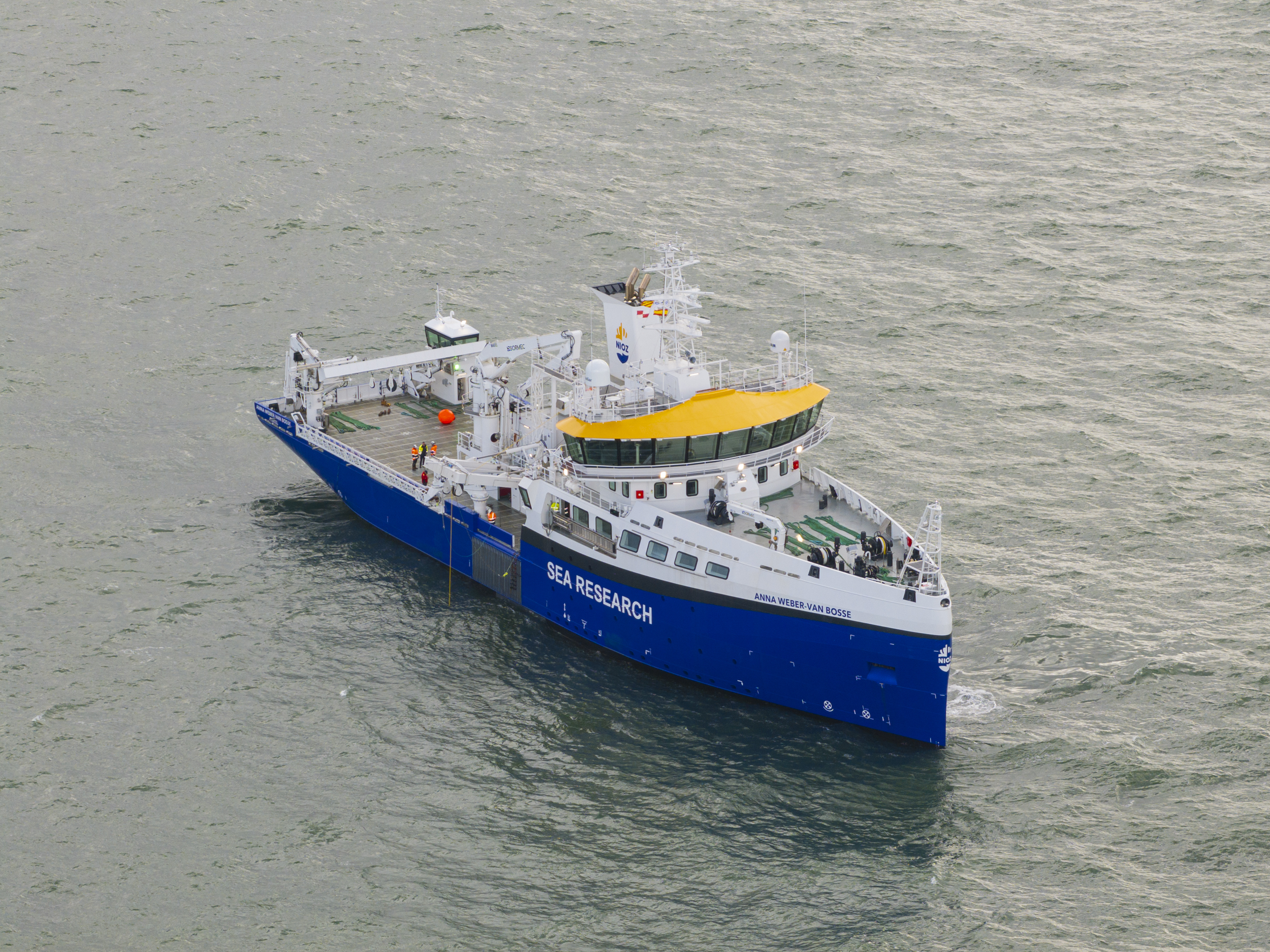
The Pelagia has been the Netherlands’ flagship ocean-going research vessel for the past 30 years. When the Royal Netherlands Institute for Sea Research (NIOZ) decided to replace her, the ambition was to build a larger, yet compact vessel, with increased capabilities and improved sustainability. C-Job provided the concept design for the new vessel, the Anna Weber-van Bosse – named after the renowned Dutch botanist and marine researcher.
For NIOZ, this was a once-in-thirty-years opportunity to express their wishes for a new vessel design, and incorporate learnings from a wide team of stakeholders and experts. The goal was to enable more, and higher quality, research.
C-Job Naval Architects discussed the different requirements of our customer, the ship crew, and the scientists performing research; to provide expert guidance on the feasibility of different inputs. The design had to optimize space, provide more living accommodation than the Pelagia, and create a safe platform for research. An example of the latter was ensuring that hazardous substances did not have to be carried long distances, or via stairways.
The vessel size, weight and draft also had to meet strict customer requirements in order to balance capability with cost.
Due to the need to increase the ship’s depth versus the Pelagia – with a maximum 5-meter draft to meet harboring demands – C-Job’s finished design allowed for portholes at sufficient height above the waterline on the deck below the freeboard deck. This optimized the available space, creating comfortable cabins for scientists in this part of the ship.
Our design added additional volume to the vessel, while also lowering its metacentric height (GM), improving its motion behavior, and limiting green water.
The Anna Weber-van Bosse is equipped with a diesel-hybrid propulsion system that is methanol-ready for the future. Due to hull strengthening and other features it is a light ice class ship which can go further than the previous vessel, specifically to the Arctic and Antarctic.
The capabilities of the new ship are considered to be around 50% greater than the previous ship, with increased accommodation for 47 crew and scientists (versus a total of 25 on the Pelagia); a multi-purpose room for meetings and lectures; space for mission-specific containerized labs to be loaded onto the vessel; and a retractable keel to aid underwater research.
Due to be christened in 2026, the design and capabilities of the Anna Weber-van Bosse will enable scientists from the Netherlands, and beyond, to conduct vital marine research for decades to come.
Meets multiple operational requirements in a compact vessel
Innovative design
Cabins close to the waterline to optimize hull space and maximize comfort
Safe and efficient
Interior design and accommodation tailored towards safe research
Future fuel ready
Diesel-hybrid propulsion system that is methanol-ready
Anna Weber-van Bosse – for NIOZ
C-Job client testimonial
"This will allow us to organize scientific expeditions to places for which we were so far depending on foreign ships. There will be new equipment on board, for example, that we did not have ourselves until now. Moreover, the Anna Weber-van Bosse is a light ice class ship. This means we can work on the edges of sea ice with it: we couldn't do that before either."
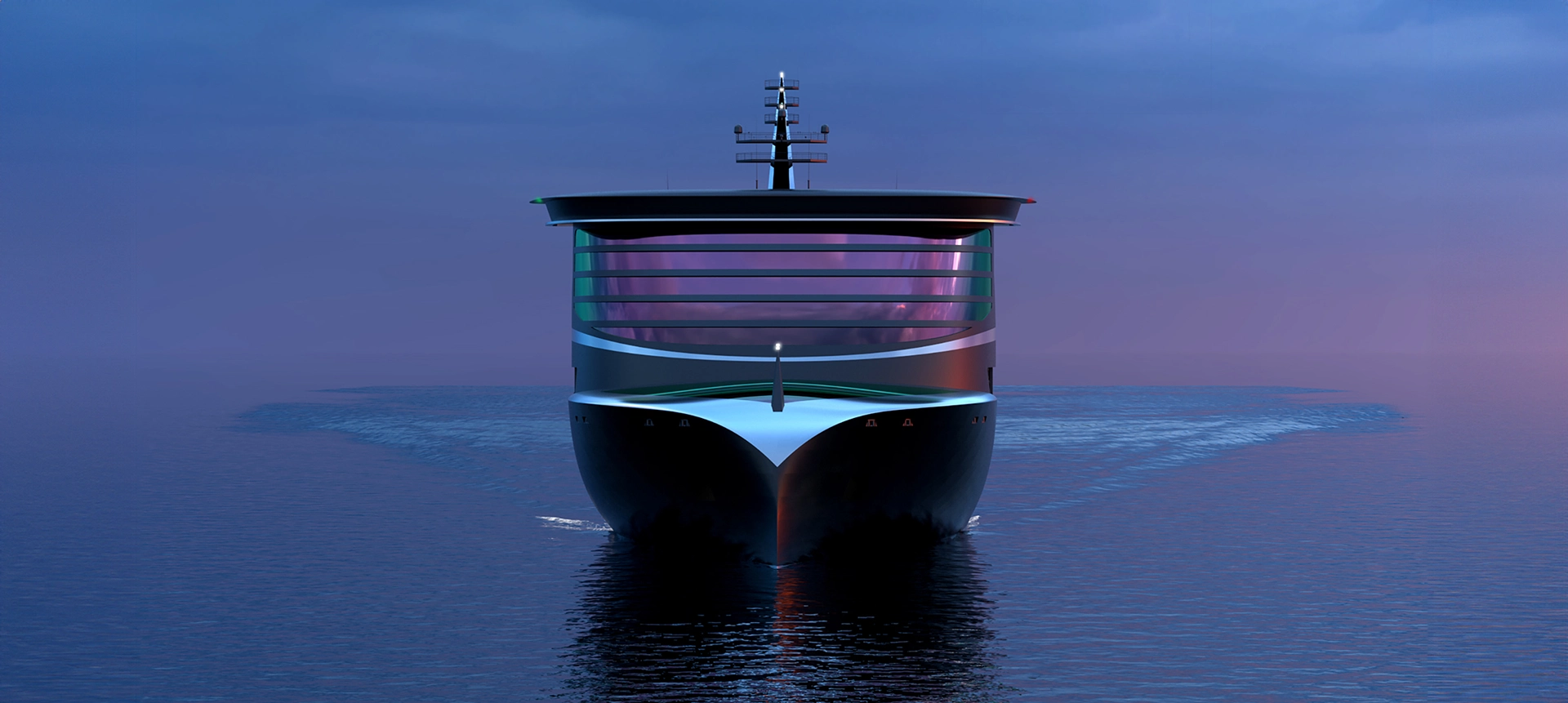
Research by C-Job demonstrates the potential for nuclear energy to become an alternative energy source which could contribute to the decarbonization of commercial shipping. This is in part due to the development of small modular reactors (SMRs) and advances in nuclear technologies. Additional C-Job studies explore new economical design speeds when using nuclear energy as a propulsion source for future cases.
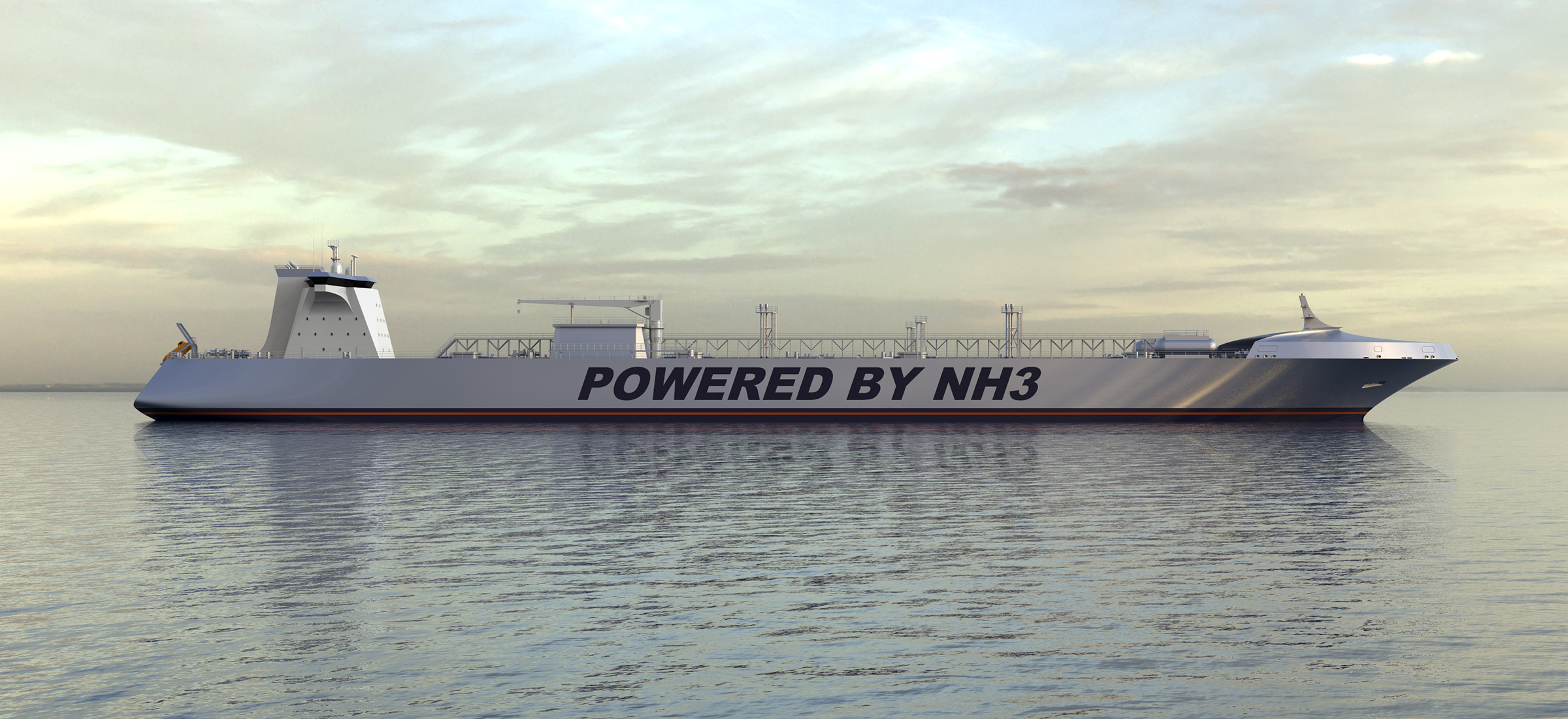
C-Job undertook research to develop a new concept design for an ammonia carrier fueled by its own cargo, based on our knowledge and experience of ammonia as an energy source. Our study shows that ammonia can be used as marine fuel if a number of safety measures are included in the design, and that its use can achieve a significant reduction in greenhouse gas emissions for maritime shipping.