latest insights
How C-Job are contributing to safety and a regulatory roadmap
We live in a time where many different initiatives to reduce dependence on fossil fuels in the maritime industry are underway, including the use of alternative fuels such as methanol, ammonia, and hydrogen. One other major pathway that shouldn’t be overlooked is the future of ships powered by nuclear energy.
C-Job has been researching the potential of nuclear energy for years and continues to play an important role in the groundbreaking NuclearDrive project. Its mission: to accelerate the implementation of modern nuclear power systems at sea before 2033. To help achieve it, the consortium brings together researchers, scientists, classification societies, ship operators, system integrators, and many other experts.
At the heart of the NuclearDrive project is the development of a reactor (Small Modular Reactor or SMR) that can be safely and efficiently integrated onboard a ship. The technology is being pursued by several nations, and the first commercial SMR projects are set to start operation around 2030, according to the International Energy Agency (IEA).
“C-Job combines extensive research into maritime nuclear energy with practical experience in implementing alternative fuels such as ammonia, methanol and hydrogen—experience that can also be applied to the integration of nuclear energy at sea.”
Robin Berendschot, Senior Naval Architect
The idea behind the SMR concept is that the reactor is standardized and compact, making it suitable for different types of vessels, such as naval ships and large offshore support vessels. Of course, regardless of the SMR concept, the use of any nuclear energy system on board demands a great deal of further research, engineering strategies, and advanced safety measures.
With NuclearDrive, this is a two-way street, whereby consortium members including C-Job are actively exploring areas such as safety systems, regulations and legislation, economic feasibility, and more. At the same time, concept designs for future nuclear-powered vessels are being created which provide an important feedback loop into that ongoing work.
Concept designs and the role of C-Job
Working together with primary partners like Allseas, C-Job’s early work for NuclearDrive has included co-developing the concept design for a floating nuclear power barge. This modular platform can deliver zero-emission power or heat to ports, ease grid pressure on land, or provide power where heavy offshore processing loads require it.
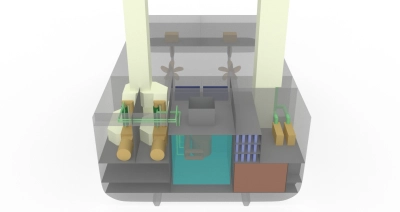
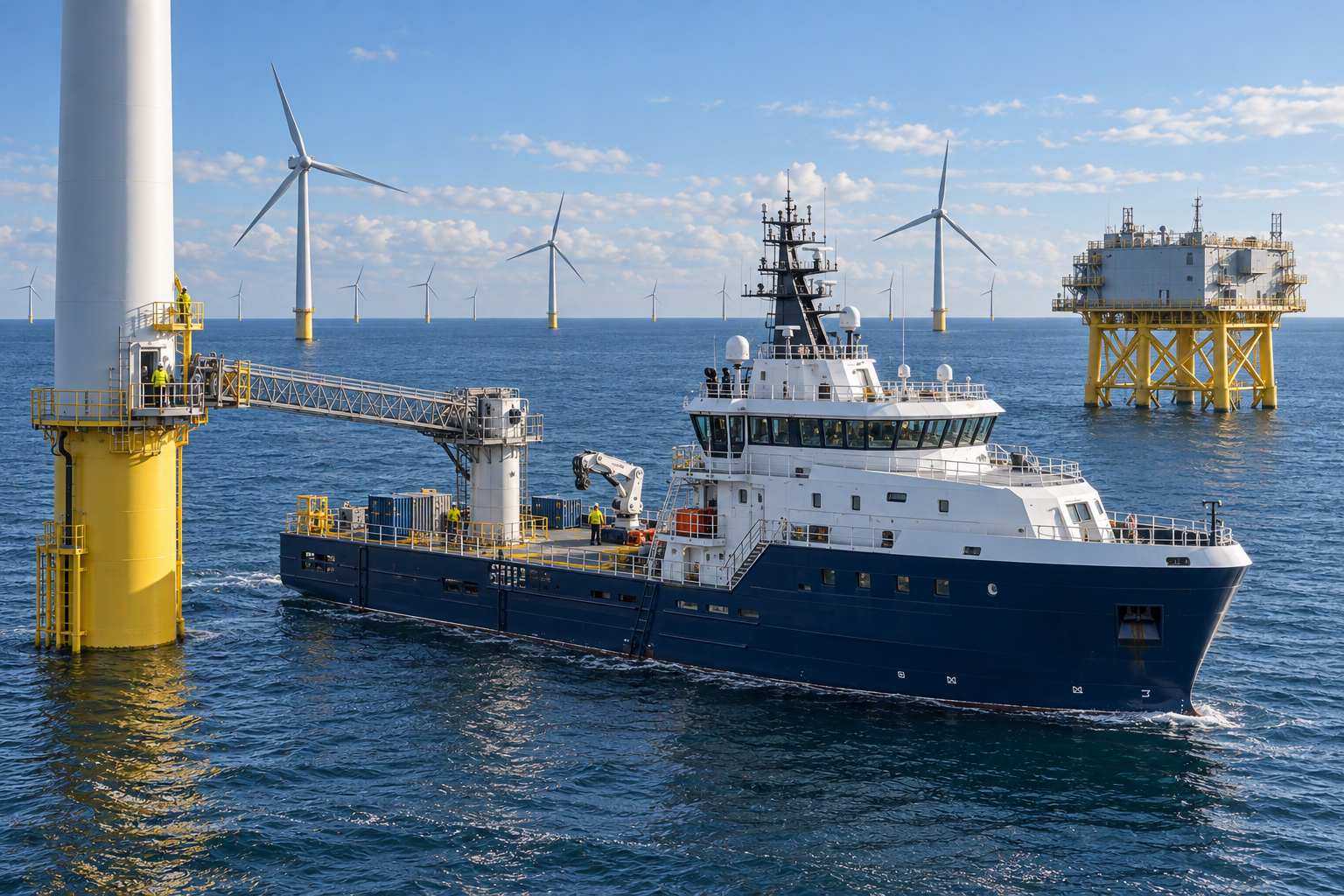
An offshore construction vessel concept design has also been created by a consortium partner. This demonstrates a use case in more demanding conditions, with high and variable power needs and a potentially harsher operating environment.
While these may be concepts, they represent important stepping stones for the development of SMR reactor technology, and have also involved the creation of detailed safety requirements, a full regulatory roadmap, and early hazard identification (HAZID) studies which will be the starting point for detailed risk assessments of nuclear-powered vessels at sea.
C-Job has a supporting role for specific work packages related to these areas. For example, we are assisting with work on advanced radiation shielding materials, and how their size and weight could be minimized while still providing high performance protection.
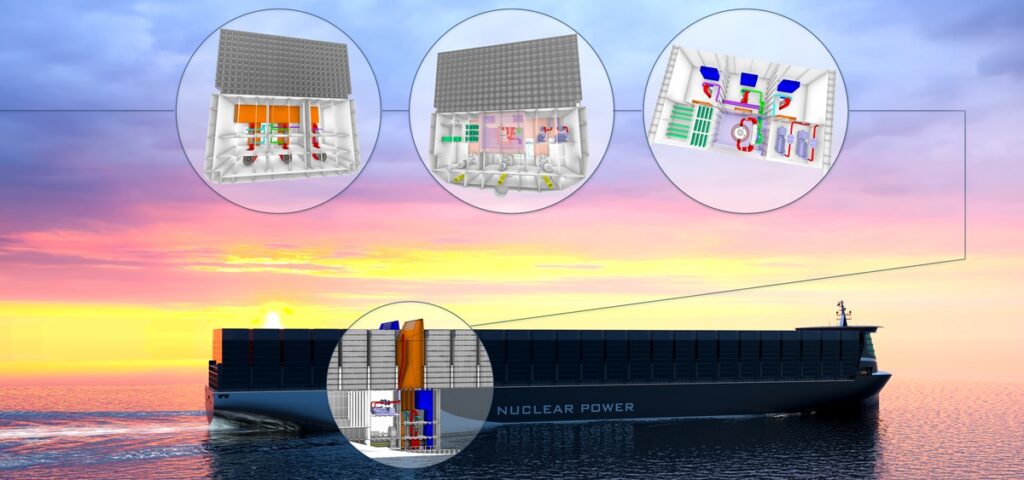
The consortium is also assessing the dynamic load response of nuclear reactors: modeling how they respond to changing power demand aboard ships – where requirements can fluctuate substantially – in contrast to relatively predictable land-based baseload demands.
For safety cases and risk assessment, we are helping to identify risks arising from combining nuclear systems with a maritime environment, and assessing the implications from both a nuclear plant and vessel perspective. These HAZID studies will continue, as part of a large group of NuclearDrive participants, to which C-Job will bring its extensive research and practical experience in implementing alternative fuels like ammonia, methanol and hydrogen.
Growing interest and regulatory engagement
The development of SMRs for use at sea can not only contribute to the sustainability of shipping, but also to the competitiveness of the Dutch maritime industry, and other maritime nations. We believe it’s why we’re seeing increased global interest in maritime nuclear applications, and the early beginnings of a regulatory framework for nuclear-powered vessels.
While the regulatory issues for nuclear propulsion on ships are considerable, the practical pathway has begun with design concepts by C-Job and others, plus ongoing hazard and risk assessments, which will be reviewed by Dutch regulators and by classification societies who participate in NuclearDrive.
Sharing these learnings with other regulators and global stakeholders is also crucial. In this respect, the launch by the IAEA (International Atomic Energy Agency) of ATLAS (Atomic Technologies Licensed for Applications at Sea) is a welcome step to support the maritime industry’s use of SMRs. ATLAS is designed to strengthen international cooperation on the safe and secure use of nuclear technologies at sea, and the use of SMRs and floating nuclear power plants are specifically mentioned.
The International Maritime Organization (IMO) participated in the IAEA’s launch of the ATLAS initiative in Washington, D.C. in August 2026, as did NuclearDrive representatives. Following the launch of ATLAS, Arsenio Domínguez, the Secretary-General of the IMO, has stated that its work on nuclear power in shipping will partly run in parallel with the IAEA. Dutch government ministries will also align and contribute to the work of ATLAS and the IAEA.